
The 50/30/20 Rule
Feb 10, 2026
by Alex Marinmont
Creative Matters More Than Optimization
Your agency sends you weekly reports.
CPC is down. CTR is up. Targeting has been "refined." Budgets have been "optimized."
And your ROAS is still trash.
Here's why: they're optimizing the wrong thing.
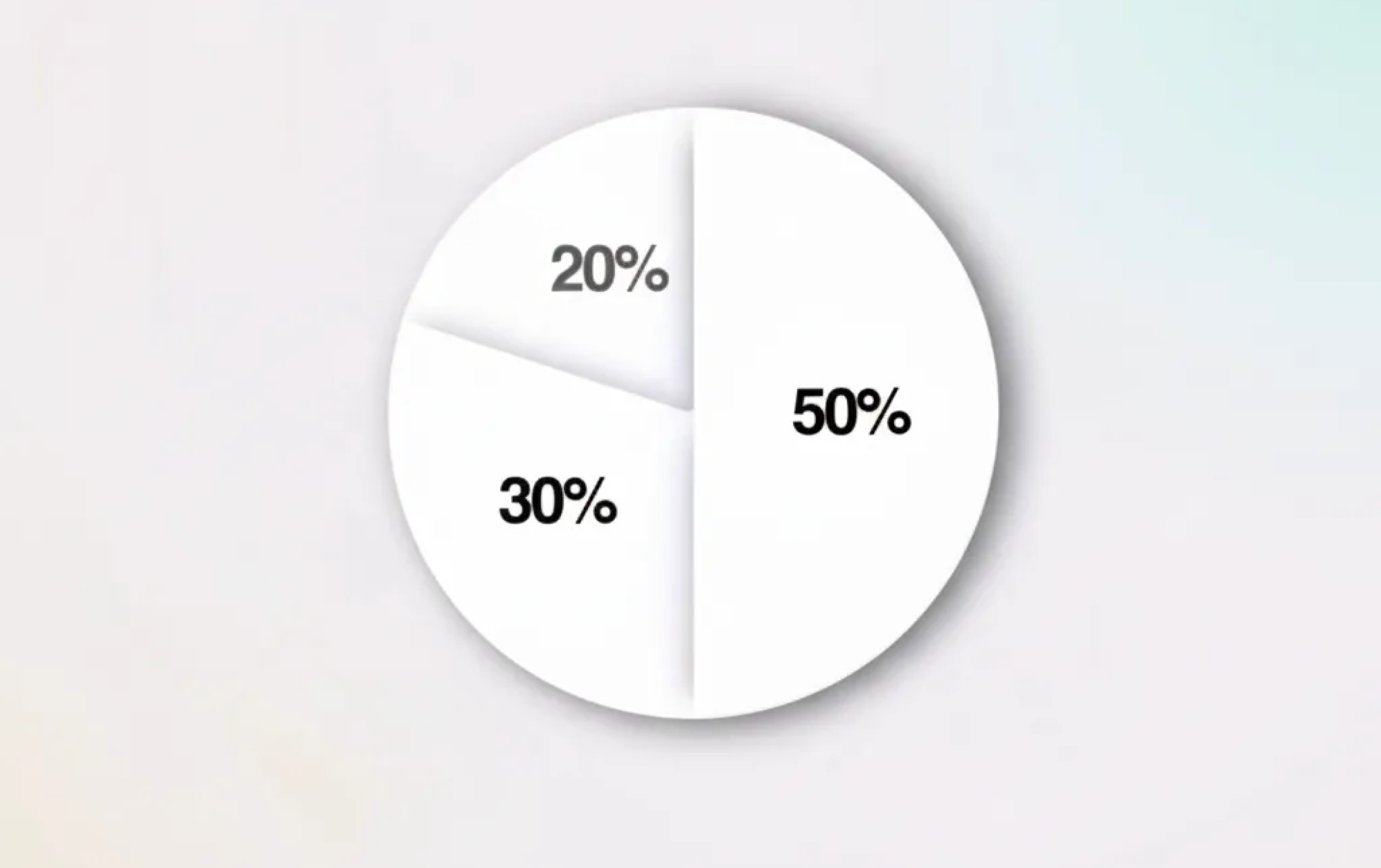
Most performance marketers spend 80% of their time tweaking campaigns and 20% on creative. But the reality is flipped. Creative is 50% of what makes ads work. Campaign structure is 30%. Optimization? 20% at most.
If your creative doesn't work, no amount of bid adjustments will fix it.
The Problem: Everyone's Obsessed with Optimization
Here's what most performance marketers do:
They launch a campaign. Then they start tweaking:
Adjusting bids every day
Testing new audiences
Refining placements
Switching between manual and auto bidding
Analyzing hourly performance data
And they call this "optimization."
But here's the truth: if your creative is weak, optimization is just rearranging deck chairs on the Titanic.
You can't optimize your way out of bad creative. You can only optimize creative that already works.
The 50/30/20 Rule (What Actually Drives Performance)
After running hundreds of campaigns, here's what actually moves the needle:
50% Creative
Your graphics, hooks, messaging, copy, video, storytelling. This is what makes people stop scrolling and pay attention.
If your creative doesn't capture attention and communicate value, nothing else matters. You could have perfect targeting and optimal bids, and your ads will still fail.
Why creative matters most:
It's what the audience sees
It's what makes them click (or scroll past)
It determines whether your message resonates
It's the difference between an ad that converts and an ad that burns budget
Example:
A DTC brand was running Meta ads with a 0.8% CTR. Their agency kept optimizing targeting and bidding. CTR stayed at 0.8%.
We didn't touch targeting. We rewrote the hook and redesigned the first 3 seconds of the video. CTR jumped to 3.2%. Same audience. Same budget. Better creative.
30% Campaign Structure
This is how you set up your campaigns: clear objectives, smart segmentation, coherent naming, strategic organization.
Good structure means:
Clarity: Each campaign has one goal (not three goals crammed into one campaign)
Unique objectives: You're not trying to do awareness and conversions in the same campaign
Good naming: You can actually understand what each campaign does without decoding abbreviations
Coherent segmentation: Audiences are logical, not random tests thrown at the wall
Why structure matters:
It determines how the algorithm learns
It affects how data is collected and interpreted
It makes it possible to actually understand what's working
It enables you to scale intelligently (not chaotically)
Example:
A B2B SaaS company was running one massive campaign with 15 ad sets targeting different industries, job titles, and company sizes. The algorithm was confused. Performance was inconsistent.
We restructured into three focused campaigns: one per industry vertical, each with clear audience segments and tailored creative. Performance stabilized. CAC dropped 34%.
20% (or Less) Manual Optimization
This is the tweaking: bid adjustments, budget shifts, pausing underperformers, scaling winners.
Notice the percentage? 20% or less.
Manual optimization should be minimal. Why? Because over-optimization kills performance.
The truth about optimization:
If you're optimizing your campaigns every single day, you're not letting the algorithm learn. You're constantly resetting the learning phase. You're making decisions based on incomplete data.
The algorithm needs time (and data) to figure out what works. If you keep changing things, it never gets that chance.
What good optimization looks like:
Review performance weekly (not daily)
Make changes based on statistical significance (not gut feelings after 24 hours)
Let campaigns run for at least 3-7 days before making major changes
Focus on big moves (pausing clear losers, scaling clear winners) not micro-adjustments
Example:
An e-commerce brand had an agency that was adjusting bids and budgets daily. "We're optimizing for you!" they said.
Performance was volatile. CPMs were climbing. ROAS was inconsistent.
We told them to stop. Let the campaigns run for a week. Make changes based on actual data, not noise.
Within two weeks, performance stabilized. ROAS improved by 28%. The algorithm finally had time to learn.
Why Most Agencies Get This Backwards
Here's the uncomfortable truth:
Agencies spend 80% of their time optimizing because it's easy to bill for.
Testing is easy to report. You can fill dashboards with charts. You can show "activity." You can say "we're constantly optimizing your campaigns."
But creative? Creative is hard. It requires strategy, taste, and actual thinking. It's subjective. It's harder to scale. It requires collaboration with designers, copywriters, strategists.
So most agencies avoid it. They focus on what they can measure and report easily: optimization.
And your ads stay mediocre.
What Good Creative Actually Looks Like
If creative is 50% of what makes ads work, what makes it good?
1. It stops the scroll — The first 3 seconds (or first line) grab attention. Ask: Would my target audience stop for this?
2. It communicates value fast — Don't bury the value prop. Lead with the outcome.
3. It matches audience awareness — Cold traffic needs different creative than warm traffic. Don't ask for the sale before explaining the problem.
4. It's strategic — Every design choice has a reason. Not just "looks cool."
5. It tests concepts, not variations — Test different hooks and angles, not "blue button vs green button."
How to Implement the 50/30/20 Rule
Step 1: Audit your current split — How much time goes to creative vs optimization? If it's 20/80, you're backwards.
Step 2: Invest in creative first — Develop 3-5 creative concepts before you launch. Test different hooks, offers, messages.
Step 3: Set up clean campaign structure — One objective per campaign. Logical segmentation. Clear naming.
Step 4: Optimize less — Let campaigns run 3-7 days before making changes. Review weekly, not daily.
The Bottom Line: Creativity + Performance = Growth
The best performance marketers aren't just media buyers. They're strategists who understand that creative drives performance.
You can't optimize your way to great results. You can only amplify what already works.
The 50/30/20 rule:
50% creative (hooks, messaging, storytelling)
30% structure (clarity, objectives, segmentation)
20% optimization (strategic tweaks, not daily panic)
If your agency is spending most of their time "optimizing," they're avoiding the real work: making your creative better.
Key Takeaways: The 50/30/20 Rule
✅ Creative is 50% of performance — If your creative doesn't work, optimization won't save you.
✅ Campaign structure is 30% — Clear objectives, smart segmentation, strategic setup.
✅ Manual optimization is 20% or less — Let the algorithm learn. Stop tweaking daily.
✅ Most agencies get this backwards — They optimize constantly because it's easy to bill. Creative is hard, so they avoid it.
✅ Over-optimization kills performance — If you're changing things daily, the algorithm never learns.
✅ Good creative stops the scroll, communicates value fast, and matches audience awareness.
✅ Test concepts, not just variations — Blue button vs green button won't fix a weak hook.
What To Do Next
If your ads aren't performing and your agency keeps saying "we just need to optimize more" — they're wrong.
You don't need more optimization. You need better creative and smarter structure.
At flagrun., we don't start with optimization. We start with creative strategy and campaign architecture. We build the foundation first — then we scale what works.
If your creative is weak, we'll tell you. If your structure is chaotic, we'll fix it. And we'll stop your agency from over-optimizing and killing the algorithm's ability to learn.